Hair Loss Treatment for Women: Science-Backed Solutions
Oct 8, 2026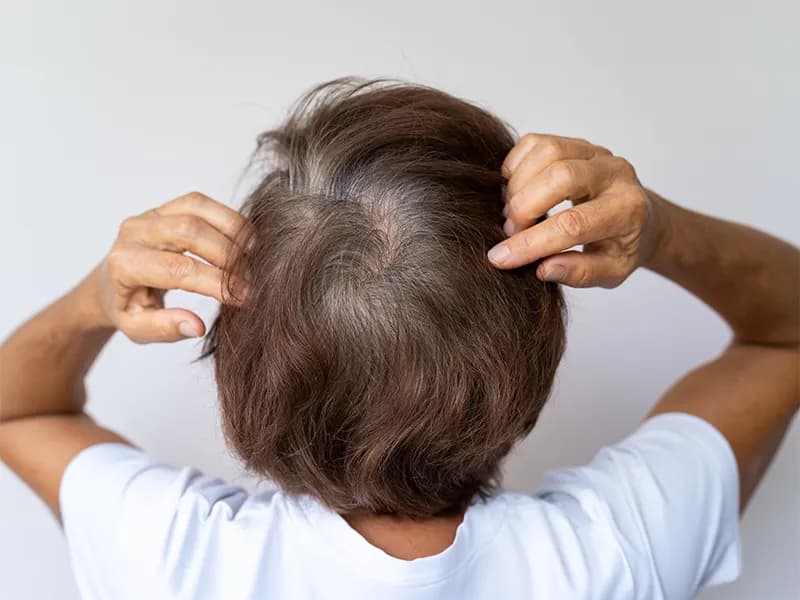
Hair loss in women carries an emotional weight that male pattern baldness often does not. Affecting roughly half of women by midlife, it transforms mundane daily experiences: catching three strands in the shower becomes a small crisis, visible scalp showing through lifelong hair, and dermatology consultations raising questions previously unimaginable.
Science has advanced significantly and credible hair loss treatment for women now exists across multiple distinct pathways. Some work at home daily whilst others happen in clinics, leveraging biological mechanisms that topical treatments simply cannot reach. Which path you choose depends entirely on what's triggering your particular shedding pattern.
Understanding Why Hair Falls
Hair loss is fundamentally your body's response to genetics, time, hormonal shifts, or disrupted biochemistry at the follicle level. Which type you have changes absolutely everything about finding the right hair loss treatment for women that will actually work.
Types of female hair loss:
- Androgenetic alopecia (female pattern baldness): The most common form, affecting roughly half of women at some point in their lives. About 90% of women with this condition have completely normal androgen levels. Hair loss happens because your particular follicles are genetically sensitive to normal testosterone levels. Susceptible follicles shrink progressively, producing thinner, shorter hairs (miniaturisation), with inheritance patterns that are polygenic but differ between men and women.
- Telogen effluvium: Occurs when hair prematurely shifts into its resting phase following major stressors such as pregnancy, weight loss, surgery, or trauma. Shedding peaks roughly two to three months after the triggering event. Encouragingly, acute telogen effluvium resolves completely on its own in 95% of cases within six months.
- Postpartum hair loss: Results from high circulating oestrogen during pregnancy prolonging the growth phase artificially, then plummeting abruptly at delivery. The resulting shedding within two to four months of birth is emotionally devastating but completely temporary and entirely normal.
- Nutritional deficiency: Surprisingly common and often overlooked. Iron deficiency stands out as the single most studied nutritional cause of shedding in menstruating women. Hair follicles are metabolically expensive and among the first tissues to suffer when key nutrients drop. A simple blood test reveals whether you're depleted or replete.
- Hormonal triggers: PCOS drives significantly higher androgen levels, shrinking susceptible follicles. Thyroid dysfunction (particularly hypothyroidism) is a common cause of telogen effluvium. Menopause shifts oestrogen levels dramatically, which can unmask underlying pattern baldness. Medications and scalp infections also trigger hair loss through various mechanisms.
The critical first step is getting a professional dermatology assessment. A qualified specialist distinguishes carefully between androgenetic alopecia, telogen effluvium, nutritional deficiency, and other causes through examination and testing. This diagnostic clarity determines absolutely everything about which hair loss treatment for women will actually succeed in your particular case.
Topical and Oral Medications: The Daily Approach
No shampoo, oil, or over-the-counter supplement reverses androgenetic alopecia completely on its own. Two medications, available without prescription in India, genuinely slow loss progression and sometimes stimulate meaningful regrowth.
Minoxidil (2% for women, 5% for men) prolongs the growth phase of hair follicles and improves blood flow to the scalp. Applied topically twice daily, it shows measurable results within three to six months, increasing hair density by roughly 15 to 20 hairs per square centimetre. Once-daily 5% foam performs similarly to twice-daily 2% solution for women, offering flexibility.
It works only whilst you use it continuously. Shedding resumes within weeks if you stop. Side effects remain rare, with occasional scalp irritation and some users reporting facial hair growth. It has been used safely for over 30 years with excellent safety data.
Finasteride (5 mg oral, once daily) blocks the conversion of testosterone to DHT, the androgen that triggers follicle miniaturisation. Women respond differently from men biologically, and clinical evidence in women remains more limited. For women of childbearing age, finasteride carries teratogenic risk in male offspring and is strictly contraindicated in pregnancy. Reliable contraception is required throughout use.
Combination approaches work better than single drugs alone. A 2025 network meta-analysis found that minoxidil plus finasteride increases hair density by roughly 30 hairs/cm² after 24 weeks compared to either alone. Adding microneedling to minoxidil proved most effective among women in head-to-head trials.
For nutritional deficiency, the logic is straightforward: if your iron, zinc, or vitamin D is demonstrably low, correcting it helps meaningfully. A blood test tells you definitively whether you're depleted. For telogen effluvium, the best treatment is often patience. Address the triggering stressor and ensure sound nutrition. Hair typically returns without intervention.
Clinical Treatments: Where Science Accelerates
Over the past five years, clinic-based therapies have fundamentally transformed what's medically possible. These clinical treatments work on follicles through biological mechanisms that topical medications simply cannot access.
Available clinical therapies:
- Platelet-rich plasma (PRP): Concentrates platelets (which contain growth factors) from your own blood sample and injects the concentrate into the scalp monthly for three to four consecutive months. A 2024 meta-analysis found 57% of women receiving PRP showed clear improvement at week 24 versus only 7% receiving saline, with density improvements of 71 hairs/cm² versus minus 27 for placebo. PRP performs comparably to minoxidil clinically and offers a favourable safety profile.
- Low-level laser therapy (LLLT): Uses red or near-infrared light to stimulate follicles through photobiomodulation, where light stimulates mitochondrial function within follicle cells. Treatment lasts 15 to 20 minutes per session, three times weekly for six consecutive months. Clinical trials confirm modest improvements in hair diameter and density. A 2024 meta-analysis suggests combining LLLT with minoxidil does not significantly improve outcomes versus minoxidil alone.
- Exosome therapy: The newest frontier, using tiny vesicles that stem cells naturally secrete, containing proteins, peptides, and signalling molecules that trigger dormant follicles. One randomised trial with 85 patients tested intradermal exosome injections combined with microneedling over 12 weeks, with hair density increasing by 35 hairs/cm², outperforming minoxidil or PRP substantially.
- Microneedling combined with minoxidil: Creates controlled micro-injuries that trigger the scalp's natural repair response whilst enhancing transdermal minoxidil delivery and stimulating follicular regeneration. A randomised trial showed 85% effectiveness in the combined group versus 45% for minoxidil alone.
Building a Hair Loss Treatment for Women: A Framework
Treatment works best as a tiered, progressive approach. Start with simple interventions and escalate methodically as needed based on response.
Treatment progression by stage:
- For early loss and prevention: Minoxidil forms the reliable, affordable, and evidence-backed foundation. Set realistic expectations at six months minimum for measurable results, and remember that consistency matters enormously. Gaps in application reset progress.
- After six months with modest growth: If you're not satisfied with results, explore PRP or LLLT options. These clinical approaches accelerate the timeline meaningfully and pair synergistically with topical medications.
- For advancing loss despite combination therapy: Exosome-based treatment offers a powerful clinical option. Results can rival hair transplantation without surgical intervention. Early data suggest durable improvement persists longer than with other approaches.
- For telogen effluvium specifically: Address the triggering stressor first. Nutrition optimisation, stress management, and time form your primary therapeutic tools. Medications prove rarely needed.
- For pattern baldness without finasteride: The combination of minoxidil plus PRP or exosome therapy has become increasingly standard in clinical practice.
The Power of Layered Protocols
Combination therapy consistently outperforms any single isolated treatment because it leverages fundamentally different biological pathways simultaneously. A 2025 meta-analysis found that exosomes plus minoxidil plus PRP lifted hair density to 35.12 hairs/cm² versus 10 to 15 hairs/cm² for minoxidil alone.
Medications address hormonal or topical biological mechanisms, clinic therapies stimulate follicle activity via growth factor signalling, and nutritional support sustains the entire system's function. The future direction involves layered protocols that intelligently address multiple pathways simultaneously rather than relying on single-mechanism approaches.
ExoSignal Hair: An Emerging Path Forward
Synthetic exosome therapy for hair represents a significant step forward in hair loss treatment for women because it bypasses biological limitations of older approaches. ExoSignal Hair uses bio-engineered exosome technology to deliver regenerative signalling molecules that natural stem cell exosomes provide, but without requiring fresh cell cultures.
The formulation combines synthetic exosomal structures with PDRN (activates specific receptors and facilitates collagen synthesis at the follicle level), biomimetic peptides (Copper Tripeptide-1 and Oligopeptide-20), apple-derived stem cells, panthenol, glutathione, and biotin. Early clinical data demonstrate meaningful hair density gains, minimal side effects, and consistently high patient satisfaction ratings.
Treatment involves intradermal injection of 1.5 to 2 millilitres into frontal or vertex regions every 14 days for four to six sessions initially, with maintenance injections every two months thereafter. For those pursuing advanced hair loss treatment, this approach offers a scientifically grounded pathway without surgery or ongoing daily medication.
Practical Steps Forward
Start with a professional dermatology assessment to distinguish between androgenetic alopecia, telogen effluvium, nutritional deficiency, and other causes. If minoxidil or finasteride suits your situation, begin there with realistic expectations at six months minimum for measurable results.
After six months of monotherapy, if you're dissatisfied with results, explore PRP or LLLT clinical options, which remain non-invasive, relatively affordable, and solidly evidence-backed. For advancing loss or seeking faster results, ask your dermatologist about exosome-based therapy or newer combination protocols.
Ensure your nutrition is sound by testing specifically for iron, zinc, and vitamin D if shedding appears diffuse across the scalp or you have other clinical signs of deficiency. Correcting deficiency costs almost nothing and can produce meaningful improvement.
Hair loss in women is genuinely common, genuinely treatable, and increasingly understood at the molecular level. The critical key is starting treatment early because hair growth takes months and treatments work best when loss is caught before extensive follicle miniaturisation occurs. The scalp responds best to comprehensive, layered protocols that address multiple pathways rather than single-intervention approaches.
Frequently Asked Questions
Minoxidil and finasteride typically show visible results after three to six months of consistent daily use. PRP and exosome therapies often demonstrate improvement within four to eight weeks, with peak results emerging over three to six months total. LLLT requires six months of consistent treatment three times weekly before meaningful gains become obvious.
Yes, clinical evidence strongly supports combination therapy. Minoxidil plus finasteride increases hair density more substantially than either drug alone, and adding PRP or exosome therapy amplifies results further still. Always consult your dermatologist before combining multiple treatments to ensure safety.
Minoxidil has been used safely for over 30 years with an excellent safety record. Side effects remain rare and usually minor. Occasional scalp irritation occurs, and some users report facial hair growth from systemic absorption.
Discontinuing use reverses any side effects completely. For the vast majority, long-term use is safe and effective.
Sexual side effects occur in roughly 2 to 3% of users. This rate is actually lower than the baseline rate in the general population of similar age. Any side effects typically resolve within months of stopping. For the overwhelming majority, finasteride carries no sexual impact whatsoever.
PRP uses platelets from your own blood, which contain growth factors naturally. Exosome therapy uses tiny vesicles (from stem cells or synthetic sources) that deliver signalling proteins. Exosomes appear more potent in early clinical trials overall.
Density gains from exosomes are roughly double those of PRP alone. Both remain evidence-backed. Exosomes are newer technology and currently more expensive.
Most clinical protocols involve three to four sessions spaced one month apart. Results accumulate progressively over time. Some people see improvement after the first session, whilst others require two or three sessions. A qualified dermatologist can assess your individual
LLLT works best for androgenetic alopecia and stress-induced telogen effluvium. It's considerably less effective for alopecia areata or scarring alopecia. FDA approval and clinical evidence are strongest for pattern baldness in both men and women specifically.
Minoxidil is absorbed systemically in small amounts. Most obstetric guidelines suggest deferring treatment during pregnancy, though accidental exposure carries minimal documented risk. Always discuss risks and benefits with your obstetrician and dermatologist before starting.
Minoxidil or finasteride form cost-effective starting points. Adding PRP or LLLT accelerates visible results meaningfully. Exosome therapy offers the most advanced clinical option currently available. Layered combined approaches consistently work better than any single intervention.
Hair density will decline again if you completely stop effective treatments because the underlying condition continues. Finasteride and minoxidil suppress loss and stimulate growth, but don't address the genetic condition permanently. This decline typically occurs within weeks to months. Exosome therapy may produce more durable results long-term, though extensive follow-up data are still emerging.
Iron, zinc, and vitamin D supplementation help meaningfully if you're demonstrably deficient. Always verify deficiency through blood testing first. Biotin, seaweed, and collagen are popular but lack strong clinical evidence.
Saw palmetto has weak evidence for modest benefit only. Adequate dietary protein, healthy fats, and micronutrient sufficiency remain the genuine nutritional foundation.
Yes, acute psychological or physical stress triggers telogen effluvium directly. Excessive shedding peaks about three months after a major stressful event. Reducing stress and addressing the trigger typically resolves the condition within six months naturally. Chronic stress may worsen existing androgenetic alopecia, making stress management important.
Hair transplantation is highly effective for advanced loss: 90%+ of transplanted follicles establish and grow for the patient's lifetime. Medical treatments (minoxidil, finasteride, PRP, exosomes) work best for early-to-moderate loss and prevention. Many dermatologists recommend exhausting medical options before considering surgical intervention.
Diffuse shedding across the entire scalp, slow wound healing, and persistent fatigue suggest nutritional deficiency. A blood test checks iron (ferritin), zinc, and vitamin D levels accurately. If genuinely deficient, correction through diet or supplements can help. If levels are normal, supplementation won't regrow lost hair.
Finasteride is not recommended for women of childbearing potential because of risk of birth defects in male offspring. Women who are postmenopausal or not of childbearing age may use it under dermatological supervision, though minoxidil combined with PRP or exosome therapy is typically preferred for female pattern baldness specifically.