Biocellulose Masks in Post-Procedure Recovery: What the Evidence Shows
Oct 13, 2026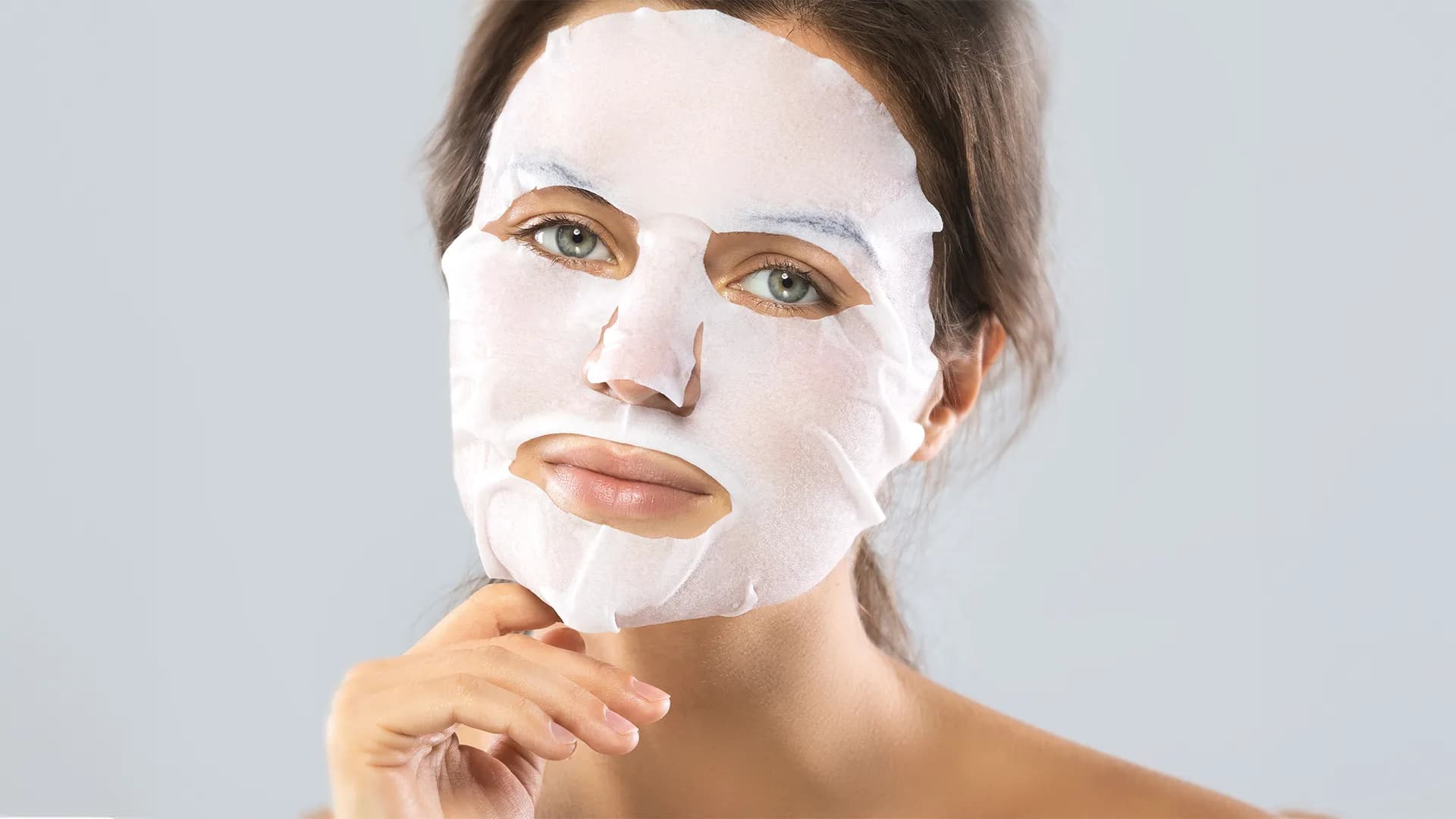
The first 72 hours after skin procedures represent active intervention windows, not mere recovery time. Patient skin becomes permeable, inflamed, and metabolically accelerated, allowing active ingredients to penetrate epidermis and dermis without the intact-barrier obstacles that normally block delivery. Post-procedure recovery functions as active biological engineering rather than passive wound protection, where biocellulose masks containing regenerative actives serve as precision delivery platforms.
The Biocellulose Platform: Architecture, Not Substrate
Biocellulose masks differ fundamentally from standard sheet masks in clinically load-bearing ways. Komagataeibacter xylinum produces pure cellulose through bacterial fermentation in three-dimensional nano-fibre matrices without lignin or binders that reduce performance. The resulting biocellulose achieves fibre diameters of 20 to 100 nanometres, creating 90 to 99% porosity whilst maintaining 10 to 20 megapascals tensile strength. This nano-fibre architecture delivers three key capabilities.
First, conformity: A biocellulose mask conforms to skin topology at sub-millimetre precision. The nano-fibre mesh interlocks facial micro-topography without folds, voids, or air gaps. It maintains 45 to 60 minutes uninterrupted contact for consistent active delivery.
Second, active delivery: The biocellulose matrix acts as an active delivery accelerator by maintaining 99% water content in its native state to create a hydrophilic microclimate. Water-soluble actives (hyaluronic acid, polynucleotides, peptides, antioxidants) remain suspended in solution and actively diffuse into the compromised barrier during the entire contact window.
Third, transdermal penetration: It creates biochemical conditions that exceed normal passive diffusion. A 45-minute application at 95% humidity increases stratum corneum hydration three to five fold. This makes hydrated stratum corneum permeable to water-soluble actives by 10 to 100 times the normal passive diffusion rate. Actives reach directly to the dermis in post-procedure skin where the barrier is already denuded by treatment.
Post-Procedure Skin: The 72-Hour Opportunity Window
Optimal biocellulose mask deployment requires understanding post-treatment skin changes. The post-procedure wound healing cascade follows predictable choreography: the first 72 hours (inflammatory phase) prioritise haemostasis and immune activation as platelets aggregate and fibrin clots form. Neutrophils infiltrate within 6 to 12 hours, pro-inflammatory cytokines spike (TNF-alpha, IL-1-beta, IL-6), and transepidermal water loss climbs 10 to 50 fold above baseline.
This paradox reveals the core advantage: compromised inflamed tissue enables maximum active ingredient penetration. Denuded stratum corneum presents no obstacle to hyaluronic acid, peptides, or polynucleotides, with upregulated cytokine environment priming fibroblasts and activated macrophages to respond to repair signals.
By day 5 to 7, the proliferative phase accelerates with keratinocyte migration, angiogenesis, and collagen synthesis, closing the deep ingredient penetration window through barrier restoration. The first application should come 2 to 4 hours post-procedure (once oozing stops) with highest intensity in days 1 to 7 (daily application, 45 to 60 minute dwell times), reducing to 3 times weekly for weeks 2 to 3.
The Science of Hyaluronic Acid in Barrier Recovery
Hyaluronic acid is frequently positioned simplistically as "moisturiser," which obscures the sophisticated underlying biochemistry. Hyaluronic acid exists as an unbranched glycosaminoglycan naturally in the dermis, comprising approximately 0.05% skin dry weight. It binds water in ratios up to 1,000:1. This represents active moisture sequestration rather than passive hydration.
Post-procedure hyaluronic acid mechanisms exceed simple moisturisation. HA binds CD44 and RHAMM receptors on keratinocytes and fibroblasts. This triggers signalling cascades that promote necessary inflammatory cell infiltration during the inflammatory phase. It shifts macrophage response toward M2 (repair-promoting) phenotype and anti-inflammatory cytokine production as healing advances.
Hyaluronic acid applied topically via a biocellulose mask in the first 48 to 72 hours hydrates the dermo-epidermal junction and supports keratinocyte re-epithelialisation actively. It reduces TEWL by 20 to 30% acutely, slowing fluid loss and allowing the inflammatory cascade to proceed without desiccation.
The ExoCell Mask's hyaluronic acid concentration is designed to work optimally with the biocellulose matrix. The nano-fibre structure keeps HA in solution and in contact with skin for the entire 45-minute dwell time. Hyaluronic acid receptor signalling shifts the macrophage environment toward faster scar maturation and reduced erythema duration.
Polynucleotides: Collagen Synthesis Acceleration
Polynucleotides function as collagen accelerants when applied via biocellulose mask. They are short-chain DNA or RNA fragments, typically fish-derived biocompatible oligonucleotides spanning 2,000 to 500,000 daltons. They operate via immune recognition.
The skin immune system recognises these fragments as "danger signals" triggering repair-directed inflammatory response through TLR3, TLR7, and TLR9 binding on fibroblasts and dendritic cells. MyD88-dependent signalling upregulates fibroblast activity and promotes collagen synthesis (types I, III, IV). This stimulates growth factor secretion whilst reducing matrix metalloproteinase activity. The result: stabilised newly formed collagen that prevents premature proliferative phase breakdown.
In clinical terms, polynucleotides applied during the proliferative window (24 hours to 2 weeks post-procedure) via a biocellulose mask accelerate healing by 15 to 20% and reduce final scar indentation and discolouration measurably. The biocellulose delivery system is critical because polynucleotides are hydrophilic and cannot penetrate intact skin naturally.
Yet the post-procedure window with a biocellulose mask maintains a hydrophilic microclimate where compromised skin barrier allows polynucleotides to reach fibroblasts directly. You deliver exogenous collagen synthesis signals at the exact moment when fibroblasts are metabolically primed to respond.
Hexapeptide-8: The Anti-Contracture Mechanism
Most practitioners overlook Hexapeptide-8 (Argireline), a synthetic hexapeptide that mimics the SNAP-25 N-terminal sequence and inhibits SNARE complex assembly normally enabling acetylcholine neuromuscular release. Post-procedure erythema extends beyond inflammation as micro-contractions of facial musculature meaningfully contribute to persistence. These contractions mechanically inhibit fibroblast collagen synthesis because healing tissue under constant micro-mechanical tension prevents effective collagen deposition.
Topical Hexapeptide-8 reduces muscle contraction intensity by approximately 30% locally for the duration of mask exposure without reaching neuromuscular junctions in meaningful concentration, keeping effects local and safe. Within treated skin dermis, reduced contractility translates to reduced mechanical stress on healing tissue, enabling faster re-epithelialisation and more effective collagen synthesis.
Hexapeptide-8-containing biocellulose mask patients show visible erythema reduction by day 3 to 5, compared to the 7 to 10 days required with standard passive post-procedure care.
Three Biocellulose Mask Protocols: Matching Indication to Application
The ExoCell biocellulose mask delivers different outcomes depending on whether skin is intact or deliberately compromised by procedure.
Protocol 1: Intact Skin Preparation. Apply the mask for 30 minutes to undamaged skin 24 to 48 hours before a planned procedure. The hyaluronic acid pre-saturates the stratum corneum whilst glycerol and antioxidants prepare the barrier, reducing procedural trauma and accelerating post-treatment recovery substantially.
Protocol 2: Standard Post-Procedure Recovery. Apply the mask 2 to 4 hours post-procedure (after oozing stops) daily for the first 5 to 7 days, then 3 times weekly for weeks 2 to 3. Each application lasts 45 to 60 minutes with no rinsing, then massage remaining serum into the skin. This is the core recovery protocol for laser, chemical peel, radiofrequency, and microneedling treatments.
Protocol 3: Microneedling Potentiation. Use 0.50 millimetre needling to create micro-wounds that supercharge mask efficacy. Apply the mask immediately post-microneedling for 30 minutes, then remove and perform a second microneedling pass. Use the ExoCell serum as lubricant without rinsing. The combination of micro-trauma, high-concentration actives, and repeated barrier disruption accelerates collagen synthesis and compresses healing from 7 to 10 days to 5 to 7 days.
Practice Benefits: Why Biocellulose Masks Matter to Your Clinic
The biocellulose mask with regenerative actives offers multiple positioning options. Integrate it into post-procedure protocols as a premium recovery addition. Retail dispense masks for home recovery. Position it as your core differentiator against competitors offering no recovery support.
Most clinics tell patients "use sunscreen and keep it clean." Your evidence-backed message is stronger: "We use biocellulose masks daily for the first week after procedures." This delivers faster healing from that critical 72-hour window. It justifies premium pricing and attracts outcome-focused patients.
Active Recovery versus Standard Post-Care
Most aesthetic practices operate under post-procedure recovery assumptions spanning many years unchanged. Standard guidance reads: "Keep it clean. Use sunscreen. Let nature take its course." This passive model works because skin heals autonomously. Yet it leaves substantial clinical opportunity unrealised and patient satisfaction gains untapped.
Emerging evidence demonstrates that active healing support with biocellulose masks produces measurably superior results: faster erythema resolution, improved scar maturation, and higher patient satisfaction. Results include 20 to 40% improvements in timeline and appearance.
Biocellulose masks with regenerative actives function as evidence-based interventions:
- Accelerate natural biology through barrier restoration and active ingredient delivery
- Provide anti-inflammatory support and collagen acceleration
- Offer faster outcome demonstration and competitive advantage
- Position recovery as a managed, engineered process rather than passive waiting
Frequently Asked Questions
No. Wait 2 to 4 hours post-procedure until seepage stops, as the mask works via active ingredient penetration and is not a haemostatic dressing. Once the surface has stabilised, that is your application window.
Yes. Biocellulose is non-allergenic and non-immunogenic. The active ingredient profile (hyaluronic acid, peptides, plant extracts) is well-tolerated across all skin types, including darker skin and sensitive conditions. No contraindications are documented in the literature.
The standard is 45 to 60 minutes, with shorter applications (30 minutes) acceptable for intact skin preparation. Longer applications (60+ minutes) do not yield proportionally better results because active ingredient uptake plateaus by 45 to 50 minutes, so do not extend duration without clinical reason.
Yes. The biocellulose matrix conforms automatically, does not slip, and requires no special technique beyond removal after the application window. You can dispense boxes to patients for home recovery. Most practitioners recommend day 1 to 3 applications in-clinic (for monitoring and professional guidance) and days 4 to 7 at home (patient empowerment and convenience).
The protocol calls for daily application days 1 to 7, but missing one day is not a setback and delays results by approximately 1 day. If a patient misses 2 or more consecutive days, the cumulative delay extends 2 to 3 days. Consistency matters, so emphasise the daily cadence, though it is not absolute.
No. The mask must be applied to clean, post-procedure skin with no other products underneath, as they block contact and reduce active ingredient delivery. You can apply other actives after the mask is removed if needed, but the mask application should remain isolated.
Generally no, though you should apply any prescribed topical treatments first and let them absorb for 10 to 15 minutes before applying the biocellulose mask. The mask's hydrophilic environment does not negate topical medications.
Frame it as recovery acceleration and outcome optimisation, not commodity skincare. Explain that the mask produces measurably better scar appearance over time. Premium recovery support adds significant value to the treatment investment.
Yes. Any procedure that compromises the barrier, including non-ablative modalities (IPL, radiofrequency, non-ablative laser), benefits from the biocellulose mask. Whilst the depth of penetration is less than ablative procedures, active ingredient support still accelerates recovery and reduces erythema.
Biocellulose masks remain stable at room temperature. Typical shelf life is 3 years in sealed packaging. Used masks should be discarded and cannot be reused. No special refrigeration is needed.
This is extremely rare, but discontinue use and assess. Most irritation stems from concurrent use of other actives or incompatible topical medications, not the mask itself. If irritation persists without an identifiable cause, refer for clinical assessment. This does not contraindicate biocellulose masks in general but suggests patient-specific sensitivity.
Timing matters: apply the mask first, let it work for 45 to 60 minutes, remove it, and then apply other modalities if desired. Do not use LED or other devices under the mask due to heat accumulation and lack of benefit, as sequential protocols work well.
Gently peel from the edge where biocellulose releases easily once the adherence layer dries slightly by 45 to 60 minutes, no resistance or pulling required. If resistance occurs, wait 2 to 3 more minutes. Teach this technique to patients so removal takes 30 seconds without trauma.
Yes. Topical Hexapeptide-8 is well-documented as safe. It does not reach systemic circulation in meaningful amounts. No contraindications exist with pregnancy, breastfeeding, or other topical treatments. Unlike botulinum toxin, Hexapeptide-8 is a peptide with no systemic effects.
Claim only what evidence supports. Use phrases such as "active recovery support," "accelerated barrier restoration," and "reduced erythema duration by 20 to 30% compared to standard post-care." Avoid absolute claims without clinical trial data supporting your specific formulation. Stick to documented mechanism and observed clinical outcomes.
The biocellulose mask functions as a 72-hour biological window accelerant rather than recovery endpoint. Patient skin will heal regardless, but whether you engineer healing actively or leave it to chance distinguishes practitioners committed to measurable outcomes. Evidence is unambiguous: active support via targeted transdermal delivery with a biocellulose mask produces measurably superior results with faster healing, better scar maturation, and higher satisfaction and referral rates.
Biocellulose masks with regenerative actives represent the standard rather than luxury addition for outcome-focused practitioners.