Anti-Aging Treatments That Actually Work, According to Dermatologists
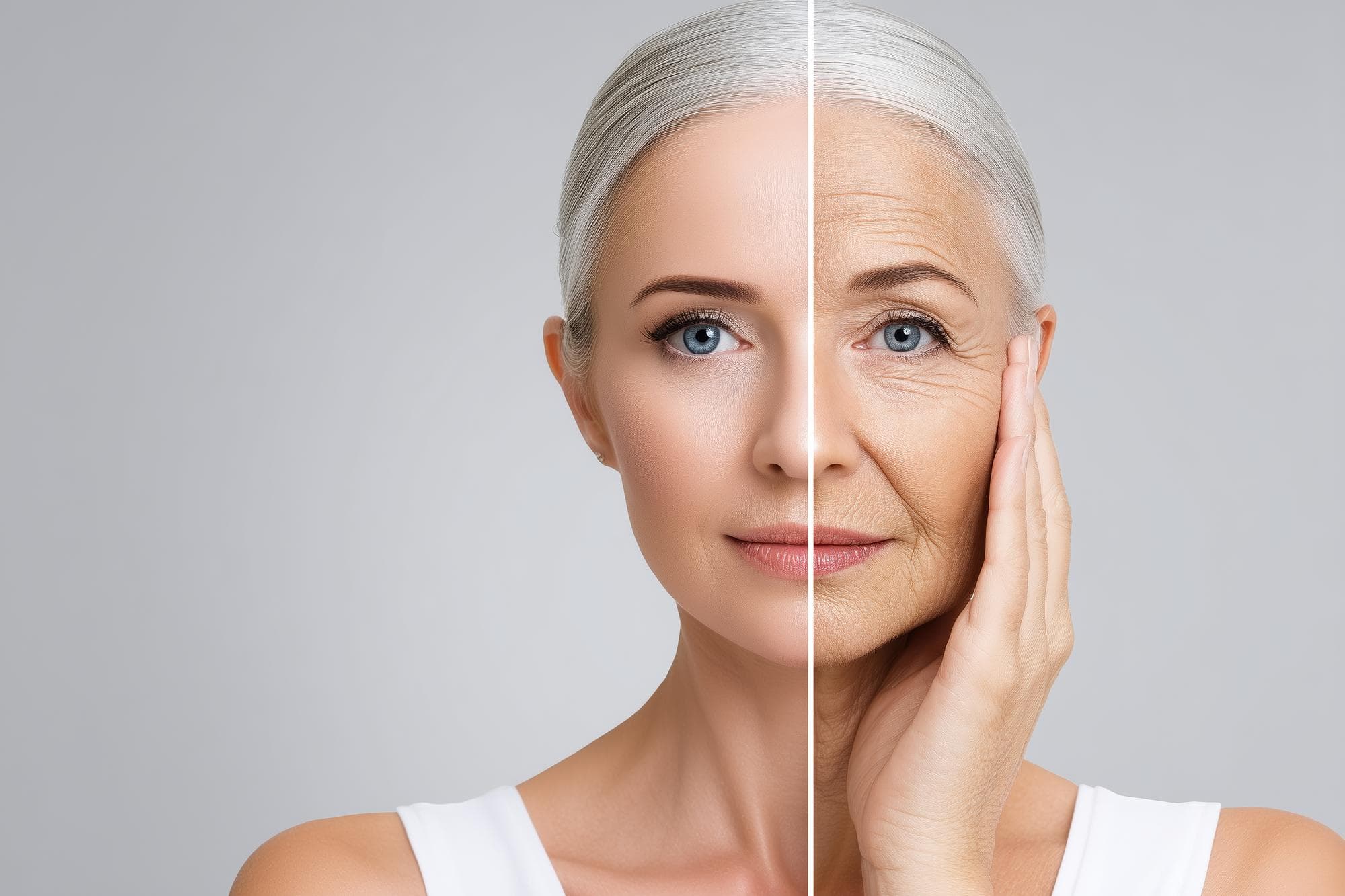
The skin you're in at 30 differs markedly from the skin you're in at 50, and collagen depletion is the culprit. Every year after your mid-20s, you lose roughly 1% of collagen production. By 50, you face a 25% deficit concentrated where damage shows most visibly, in the deep structural layers that keep skin plump and elastic.
Dermatologists see this biology up close, watching it unfold patient by patient across years. In our clinical experience at Aakaar, we've observed that dermatologists develop a precise view of which treatments for anti-aging deliver results and which promise more than evidence supports.
The good news: effective anti-aging treatments now exist with solid scientific grounding. These interventions rest on clinical evidence, cellular mechanisms, and consistent outcomes rather than quick fixes fading in weeks. They reshape how your skin ages in ways serums and creams simply cannot achieve.
Results require consistent commitment to protocol, as repeated treatments compound into visible improvement over months. Single sessions produce no meaningful change. Dermatologists recommend specific approaches backed by mechanism, clinical evidence, and consistent outcomes when the goal is genuine anti-aging benefit.
How Skin Actually Ages (And Why Most Creams Miss the Point)
Before tackling solutions, you need to understand the problem: skin ageing is a cascade of simultaneous biological changes.
Collagen breakdown is the primary culprit. Your skin's structure depends on a dense network of collagen fibres beneath the epidermis (the outer layer you see in the mirror). Collagen provides firmness, elastin provides bounce, and hyaluronic acid draws water into the dermis to plump cells from within.
As you age, your body produces less of all three. Environmental damage from sun exposure and oxidative stress degrades existing collagen further.
What happens during visible ageing:
- Fine lines appear first, clustered around the eyes and mouth where skin is thinnest and moves most
- Deeper folds follow as collagen loss deepens
- Skin loses luminosity as dead cells accumulate on the surface, scattering light unevenly
- Volume diminishes as fat pads shift and underlying bone resorbs, causing skin to settle downward
Most over-the-counter products address only the surface layer. Retinol speeds cell turnover, peptide serums signal collagen production, and hyaluronic acid hydrates within the stratum corneum and epidermis. Yet none penetrate deeply enough to repair the collapsed structural matrix where real aging actually unfolds.
Professional anti-aging treatments exist precisely because the problem lies deeper. They bypass the skin's natural barriers and work at the dermal level, where the damage that matters truly occurs.
The Gold Standard: Exosome-Based Skin Regeneration for Anti-Aging
Exosomes are tiny particles that carry healing signals between cells, roughly one-millionth their size, transporting growth factors, peptides, and nucleic acids that tell your skin cells to regenerate. The breakthrough in anti-aging came when dermatologists realised they could synthesise these exosomes in a lab and deliver them directly to ageing skin at clinical concentration.
Key components in exosome-based formulations:
- Polynucleotides (high and low molecular weight variants) stimulate fibroblasts to produce new collagen
- Biomimetic peptides engineered to mimic natural signalling molecules and direct cells toward regeneration
- Plant-derived stem cell extracts providing additional growth factors
Anti-aging shifts fundamentally with exosome-based treatments, which work at the cellular instruction level rather than burning or injuring tissue. Most patients notice visible skin firmness improvement after a single session, with dramatic results on the neck and décolleté. Areas where traditional dermatology has historically underperformed.
Professional Anti-Aging Treatments: What Works
Dermatologists typically recommend a tiered approach to anti-aging that builds logically from gentlest to more intensive. Peptide and exosome serums delivered via biostructuring masks represent the entry point for practical anti-aging. A concentrated serum is applied and sealed with a structuring gel mask containing peptides, gold carriers, and hydrating polysaccharides that work together.
The V-Tech System exemplifies this approach, combining high-concentration PDRN (a DNA fragment that helps cells repair themselves) serum with apple-derived stem cell extracts, followed by a gel mask containing low molecular weight polynucleotides. Clinical evidence supports visible texture and elasticity improvements within two weeks of consistent use.
Professional anti-aging treatment options:
- Topical exosome and growth factor serums. Creates controlled micro-injuries in the dermis, triggering wound-healing that produces new collagen. Growth factors penetrate directly into the stimulated dermis when exosome serums are applied immediately after.
- Topical radio-frequency applications.Adds heat-induced collagen contraction, causing existing collagen to tighten immediately while stimulating new production over weeks.
- Laser resurfacing. Vaporises thin layers of skin to stimulate collagen. Non-ablative fractional lasers allow same-day return to normal activities.
- Topical fillers and biostimulators. Replace lost volume directly. Hyaluronic acid fillers provide immediate plumping but degrade over six to twelve months. Biostimulatory fillers trigger collagen production with longer-lasting results.
- Botulinum toxin. Blocks nerve signals to facial muscles, preventing micro-contractions that deepen lines. Preventive use starting in your 30s substantially slows wrinkle formation. The effect lasts three to four months.
Exosome-based treatments stand apart because they work at the level of cellular communication, telling your cells to regenerate rather than fighting ageing with heat, needles, or toxins. This is why dermatologists increasingly recommend them as a foundation layer.
Professional Anti-Aging Treatment Selection
The highest-value anti-aging treatments are exosome-based serums and fractional laser. Both deliver visible, lasting results and address structural collagen loss directly, which makes them fundamentally different from surface-only approaches.
Dermatologists now recommend combining approaches for anti-aging, as results exceed what any single treatment delivers alone. A typical protocol might include exosome serums used monthly initially, fractional laser added annually, and botulinum toxin applied preventively. Combined approaches outperform single modalities because they address different layers and mechanisms simultaneously.
What Dermatologists Actually Recommend
When dermatologists speak off the record about their own anti-aging choices, a consistent pattern emerges. Almost all prioritise prevention and sun protection above everything else. Sunscreen remains the single most effective anti-aging treatment available. UV damage accounts for 80% of visible skin ageing.
Once damage is done, undoing it is exponentially harder than preventing it. Prevention is maintenance. Treatment is reconstruction after damage accumulates.
The dermatologist's anti-aging hierarchy:
- Prevention and sun protection above all else
- Starting retinoids in your 20s or 30s (prescription tretinoin or over-the-counter retinol)
- Professional dermal-level treatments for visible lines and texture loss
- Exosome-based regenerative treatments for maximum visible results
- Combination approaches pairing multiple modalities
For visible results in the shortest timeframe, dermatologists increasingly recommend exosome-based regenerative treatments. These address collagen loss and cellular signalling breakdown directly, which distinguishes them from every other category. Monthly protocols deliver measurable skin thickening and elasticity improvement within four to eight weeks.
Patients observing anti-aging often note a clear sequence: skin texture changes before wrinkles fade. The surface becomes smoother and pore size decreases visibly within eight weeks as exosomal peptides trigger fibroblasts to produce new collagen. Measurable wrinkle reduction appears by twelve weeks as skin feels more supple and luminous.
Combining exosome-based serums with annual fractional laser treatments delivers amplified results. The laser creates controlled injury that amplifies collagen remodelling, while the exosome serum maintains collagen signalling between sessions. Dermatologists using this combination report the highest patient satisfaction rates of any protocol.
When to Start Anti-Aging Treatments
Dermatologists recommend starting earlier than most patients expect. If you have fair skin and sun exposure history, consider preventive treatments in your 30s, as damage accumulates silently and years of collagen breakdown precede visible lines.
In your 40s with visible fine lines, professional anti-aging treatments are overdue. Past 50, visible ageing requires more aggressive intervention. This doesn't mean extreme measures. Exosome-based treatments alone won't restore decades of loss, but combined with other approaches, results are genuinely striking.
Age alone shouldn't determine your approach. Skin condition, family history, sun exposure, and goals matter more than chronological age when planning interventions.
The Emerging Science: Peptides and Cellular Signalling
Biomimetic peptides are engineered sequences that signal cells to increase collagen production. A copper tripeptide, for instance, tells fibroblasts to boost collagen cross-linking. Polynucleotides trigger an innate immune response in skin, activating repair pathways specific to anti-aging.
The real breakthrough is synthetic exosomal delivery for anti-aging interventions. Exosomal structures package these peptides and support cellular uptake more readily than free-floating serums. Clinical data shows measurable skin elasticity improvements within one week and visible texture improvement by week two. By week twelve, fine line reduction is substantial and observable in photographs.
Timeline of visible exosome-based treatment results:
- Week 1: Skin elasticity measurably improves
- Week 2: Texture refinement becomes visible
- Week 4-8: Pore size and roughness decrease noticeably
- Week 12: Fine lines show substantial reduction in photographs
Realistic Expectations: What Changes and What Doesn't
Dermatologists set realistic expectations about what anti-aging treatments can accomplish. This matters more than marketing claims.
What improves measurably:
- Fine lines soften substantially
- Moderate lines improve visibly
- Deep folds improve (though rarely disappear completely without filler)
- Skin texture, luminosity, pore size, elasticity, and firmness all improve measurably
Anti-aging treatments do have limitations. They cannot tighten loose, hanging skin entirely, erase deep folds without combination approaches, prevent further aging once treatment stops, change underlying bone structure, or address severe volume loss without fillers.
Most dermatologists describe realistic outcomes as turning back the clock five to ten years with consistent treatment. You won't regain your 20-year-old skin, but you will look noticeably younger and fresher. A meaningful improvement in confidence for most people.
Combining Treatments for Maximum Effect
The most advanced anti-aging strategy combines modalities intelligently rather than stacking everything at once.
Strategic protocol sequence:
- Start with exosome-based serum and mask treatments monthly for four months
- Add fractional laser resurfacing annually for deeper collagen remodelling
- Introduce botulinum toxin preventively for expressive lines
- Consider fillers for significant volume loss
This combination works because exosome serums keep fibroblasts primed to respond to laser stimulation, and laser remodelling provides deeper change that serums amplify in subsequent sessions.
ExoTech Gel: Exosomal Support Between Treatments
For patients undergoing professional anti-aging treatments, the ExoTech Gel provides meaningful support between sessions. It contains concentrated exosomal formulations infused with colloidal gold, low molecular weight hyaluronic acid, snail slime polysaccharides, and biomimetic peptides that continue cellular signalling nightly. Visible skin-lifting and firmness improvement appear within hours of application. Results accelerate considerably when combined with monthly exosome serum protocols, as the gel maintains momentum between professional sessions.
The Non-Negotiables: Sunscreen, Retinoids, and Consistency
Before investing in professional anti-aging treatments, dermatologists insist on three foundational practices.
Essential anti-aging foundations:
- Use broad-spectrum sunscreen daily with SPF 30 minimum (SPF 50 ideally), reapplied every two hours outdoors, to prevent new damage while treating existing damage
- Establish a retinoid regimen using prescription tretinoin or over-the-counter retinol applied nightly, starting low and increasing slowly to avoid irritation
- Maintain consistency, as treatments work through cumulative effect across months
Patients who skip months see minimal results. Those who commit to a protocol. Monthly treatments, nightly serums, quarterly maintenance. See significant improvement. Consistency is unglamorous but essential.
Frequently Asked Questions
Yes, but you should proceed with caution. Topical exosome serums and soothing masks work well because they do not abrade the skin barrier. You should always perform a patch test first. If you have rosacea or severe sensitivity, discuss options with a dermatologist before starting treatment, as retinoids may need to be introduced slowly.
Texture and luminosity improve within one to two weeks, with fine line reduction becoming visible by four to eight weeks. Skin elasticity and firmness improve noticeably over three to four months of consistent monthly treatments, though deeper lines require longer or combined approaches.
No. Your skin continues to age, and improvements gradually fade if you stop treatment. The collagen built during treatment doesn't disappear immediately, though, so maintenance sessions (quarterly or semi-annual) preserve results without requiring the intensive initial protocol.
Preventive approaches are ideal: sunscreen, retinoids, and possibly starting with gentler exosome-based treatments if you have early lines. Focus on prevention.
Spacing is generally safer. Start with exosome serums monthly, then wait at least two weeks before adding other treatments, or if doing laser resurfacing, wait four to six weeks before intensive serums. Your dermatologist will advise based on your specific plan.
Cosmetic products work on the epidermis (outer layer), while professional anti-aging treatments reach the dermis where collagen lives. Results are therefore incomparably more dramatic. No topical serum, regardless of price, matches what professional treatments achieve.
Not sustainably. UV damage accumulates faster than treatments rebuild collagen, undermining any professional protocol. Sunscreen is non-negotiable.
Both approaches work. Preventive use starting in your 30s or early 40s slows line formation and may prevent deep lines from developing, while treating established lines flattens them. Starting preventively tends to be more cost-effective over a lifetime.
Exosomes target the cellular communication level. Rather than creating injury as laser or topical procedure do, or blocking muscle movement as botulinum toxin does, they tell your cells to regenerate. Results are faster and based on signalling rather than trauma.
Most professional treatments are deferred during pregnancy and breastfeeding. Sunscreen and gentle retinol remain safe. Discuss any planned treatments with your dermatologist and OB/GYN to clarify what's appropriate for your stage.
There's no magic number, but if you have visible lines and texture loss, you're overdue. Preventive treatment in your 30s is reasonable if you have early fine lines, and family history of deep wrinkling or significant sun damage justifies earlier intervention.
Yes, though results may vary. Darker skin types may experience more post-inflammatory hyperpigmentation with some laser treatments, making laser selection critical. Exosome-based treatments work similarly across skin types, so discuss your specific skin type with your dermatologist to select the safest options.
Most dermatologists recommend quarterly maintenance sessions for the first year, then semi-annual sessions thereafter. Some patients sustain results with annual treatments, though three to four sessions yearly remains most common for optimal appearance.
Many dermatologists recommend spacing intensive treatments during peak sun months, as laser and topical treatment create temporary inflammation and increase photosensitivity. Exosome serums are safer year-round but still pair better with rigorous sunscreen use. Discuss timing with your clinician.
Pore size is partly genetic, partly determined by oil production. Treatments reduce their appearance by thickening surrounding skin and improving texture, though they don't change pore size itself. Results improve with consistent treatment but require maintenance.